


Wills vs. Trusts: Which Is Right for You?
When it comes to planning your estate, you have two primary choices: a will or a trust. Both have their advantages and potential drawbacks, and sometimes, a combination of both can be the best solution. Here’s a simple breakdown to help you understand these options and make an informed decision.
What Is a Will?
A will is a legal document that spells out how you want your assets distributed after you’re gone. It can also name guardians for your minor or special needs children and designate an executor to manage your estate.
Key Points About Wills:
- Effective After Death: A will only takes effect when you pass away.
- Probate Process: Your will needs to be validated through probate court, which can be time-consuming and costly. The court handles settling debts, paying taxes, and then distributes the remaining assets.
- Public Record: The probate process is a matter of public record, meaning your estate details are not kept private.
Choosing an Executor:
Selecting the right executor is crucial. Look for someone who is:
- Trustworthy
- Organized
- Impartial
- Available and willing
- Knowledgeable about finances or legal matters
When a Will Might Be Enough:
Wills are often suitable for straightforward situations, such as:
- A married couple with minor children, wishing to leave their assets to their kids and name a guardian.
- A single person wanting to leave assets to family members or a charity.
For more complex needs or a higher level of control, you might want to consider a trust.
What Is a Trust?
A trust is a legal arrangement where one party (the grantor) transfers assets to another party (the trustee) to manage for the benefit of a third party (the beneficiary).
Why Consider a Trust?
- Asset Management: Ensures your assets are handled according to your wishes.
- Protection: Assets in a trust might be shielded from creditors or legal issues.
- Avoid Probate: Skip the costs and public scrutiny of probate.
- Tax Benefits: Can help minimize estate taxes.
The Trustee:
Unlike an executor, a trustee’s role can begin as soon as the trust is established. The trustee manages the trust assets and must act in the best interest of the trust and its beneficiaries.
The trustee that is selected may have access to the assets even while the grantor is living and capable of making decisions.
When a Trust Might Be Beneficial:
Consider a trust if:
- You own property in multiple states or have complex ownership structures.
- You want to set conditions on how beneficiaries access the assets.
- You have minor or special needs children who could face issues with direct inheritance.
- Your net worth exceeds the lifetime exclusion and requires more intricate planning.
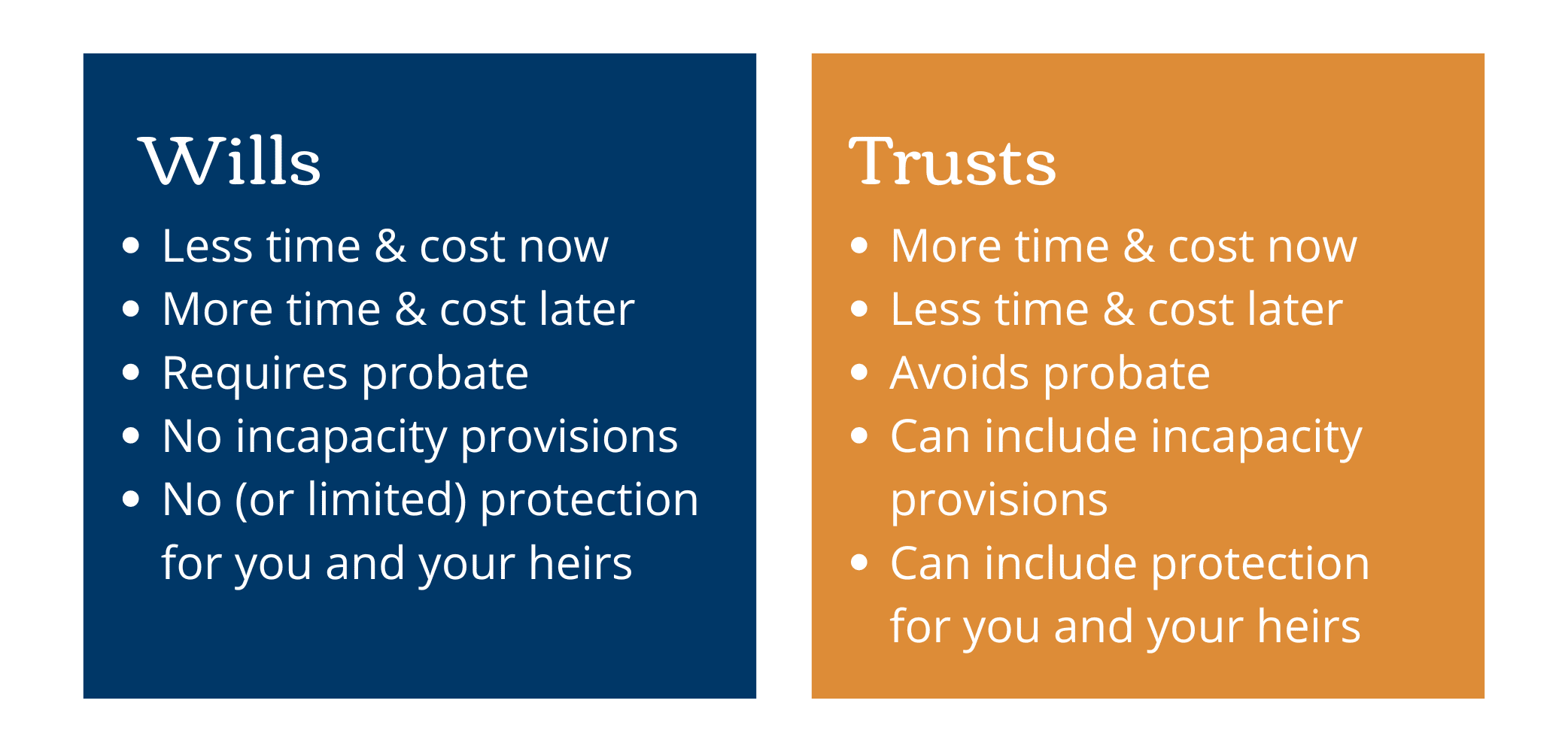
Wills vs. Trusts: The Similarities and Differences
Similarities:
- Both allow you to control who inherits your assets and who makes financial decisions.
- Both can be changed while you’re alive but become fixed upon your death or incapacity.
Differences:
- Probate: Trusts can avoid probate if properly funded, while wills must go through probate.
- Cost and Privacy: Probate can be expensive and public. Trusts, when set up correctly, offer privacy and may be less costly to administer.
- Control: Trusts can provide guidance if you become incapacitated, whereas wills only address matters after death.
- Initial Expense: Trusts generally cost more to set up than wills, but this isn’t always the case.
Conclusion: Choosing the Right Path
Deciding between a will and a trust depends on the complexity of your estate and your personal needs. It's always a good idea to consult with an estate planning attorney to find the best approach for your situation. A well-thought-out estate plan will give you peace of mind, ensure your wishes are met, and provide for your loved ones in the way you intend.
Disclaimer: The intent of the information to follow is an overview and not designed to provide any specific financial or legal advice. This information is merely to inform and I encourage you to reach out to your financial professional about your specific situation.
Become empowered with a plan
We remove the complexity